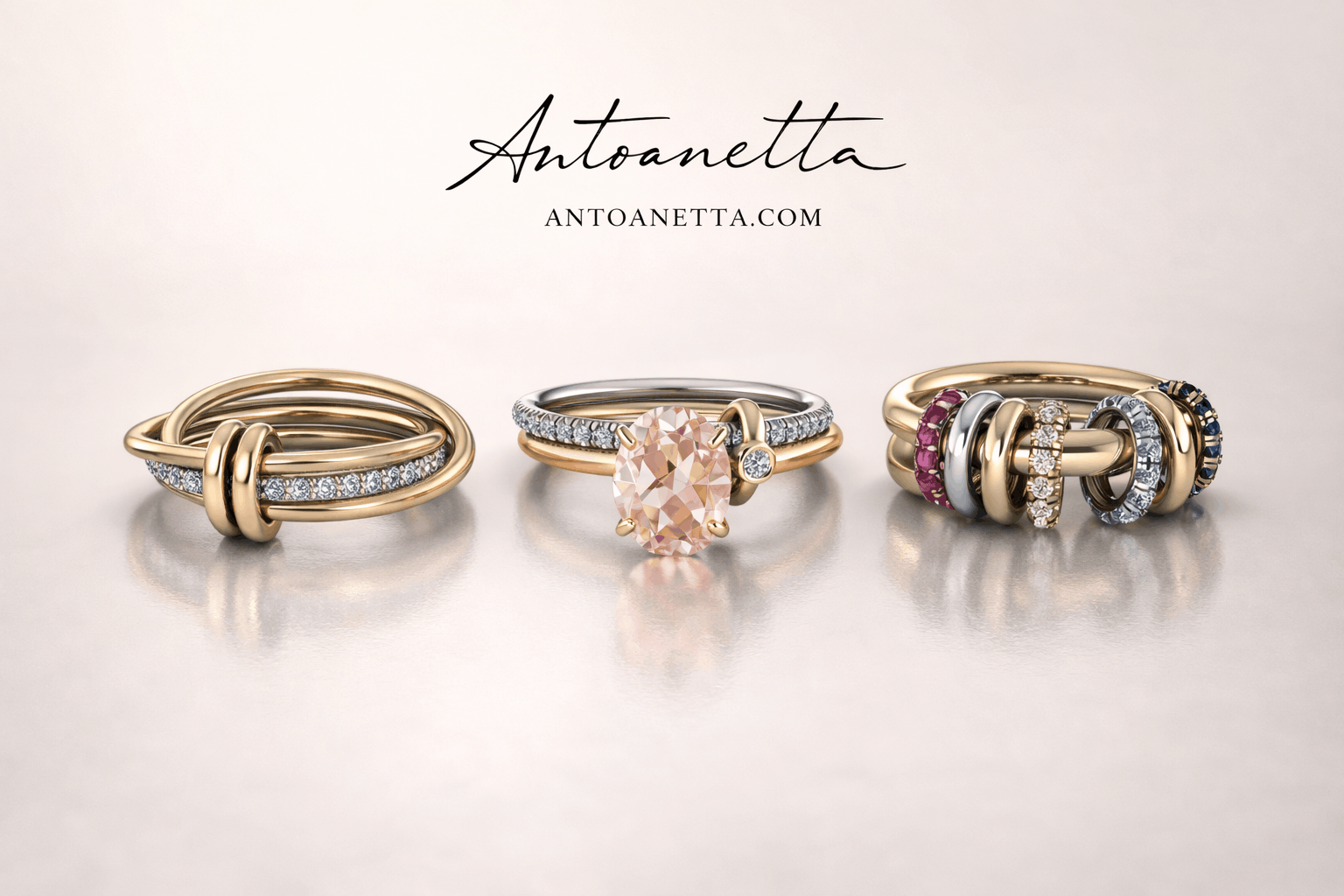
Is Yellow Gold or White Gold More Durable?
White gold is generally harder than yellow gold at the same karat, which gives it a slight edge in scratch resistance. However, durability is not just about hardness. White gold relies on rhodium plating for its color, and that plating wears off over time - requiring periodic maintenance that yellow gold does not need. The full picture of durability depends on how you define it and what kind of wear the ring will experience.
What Makes White Gold and Yellow Gold Chemically Different?
Both start as pure gold. The difference is in the alloy metals mixed with the gold to create the final color and working properties. Yellow gold alloys typically use copper and silver, which preserve the natural warm tone of gold while adding strength. White gold alloys replace some or all of the copper with metals like palladium, nickel, or zinc, which bleach the gold to a pale silver-white color.
At 14k, both contain 58.3% pure gold. The remaining 41.7% determines the color and mechanical behavior. White gold alloys tend to produce a harder metal because palladium and nickel are harder than copper. This means a 14k white gold ring will generally resist surface scratches slightly better than a 14k yellow gold ring of the same design.
How Does Scratch Resistance Compare Between the Two?
In controlled hardness testing, 14k white gold typically measures slightly higher on the Vickers scale than 14k yellow gold. In practical terms, this means white gold picks up fewer fine scratches during everyday activities. The difference is modest but real - after several months of daily wear, a yellow gold ring may show a softer, more lived-in surface character compared to white gold.
That said, both alloys are durable enough for lifetime wear. The scratch resistance gap between them is much smaller than the gap between either one and softer metals like 18k or 24k gold. Choosing between yellow and white gold for durability alone would be like choosing between two excellent options based on a marginal difference.
What Is Rhodium Plating and Why Does It Matter?
Most white gold rings are plated with rhodium, a platinum-group metal that provides a bright, mirror-like silver finish. Without rhodium, white gold has a warm grayish or slightly yellowish tone that many people find less appealing than the crisp white they expect. The rhodium layer also adds a thin coat of extra hardness and tarnish resistance to the surface.
The problem is that rhodium plating wears off. Depending on how often the ring is worn and what it contacts, rhodium can start showing through in as little as six months to two years. The ring does not look bad without it - it simply looks warmer and less mirror-bright. Replating costs between $40 and $80 at most jewelers and takes about a day. Yellow gold never needs this treatment because its color is inherent to the alloy, not applied to the surface.
Which Holds Its Shape Better Over Years?
Both alloys hold their shape well at 14k. The structural difference between them is negligible for most ring designs. Where the distinction might matter is in very thin bands or delicate settings where even small differences in hardness affect rigidity. In those cases, white gold has a slight structural advantage.
For wider bands, statement rings, or designs with substantial metal volume, both yellow and white gold perform identically in terms of structural integrity. The ring's design and construction quality matter far more than the alloy color when it comes to maintaining shape over decades of wear.
Which Is Better for an Everyday Ring?
If low maintenance is your priority, yellow gold wins. It never needs replating, its color does not change, and it develops an attractive warm patina over time that many wearers prefer. If you want the hardest possible surface and prefer a silver-toned metal, white gold delivers that - with the understanding that you will need occasional replating to maintain the bright white finish. Browse 14k gold rings in yellow, white, and rose gold to compare how each looks in finished designs.
Compare yellow, white, and rose gold in rings designed for a lifetime of wear.
Browse Gold Ring Styles