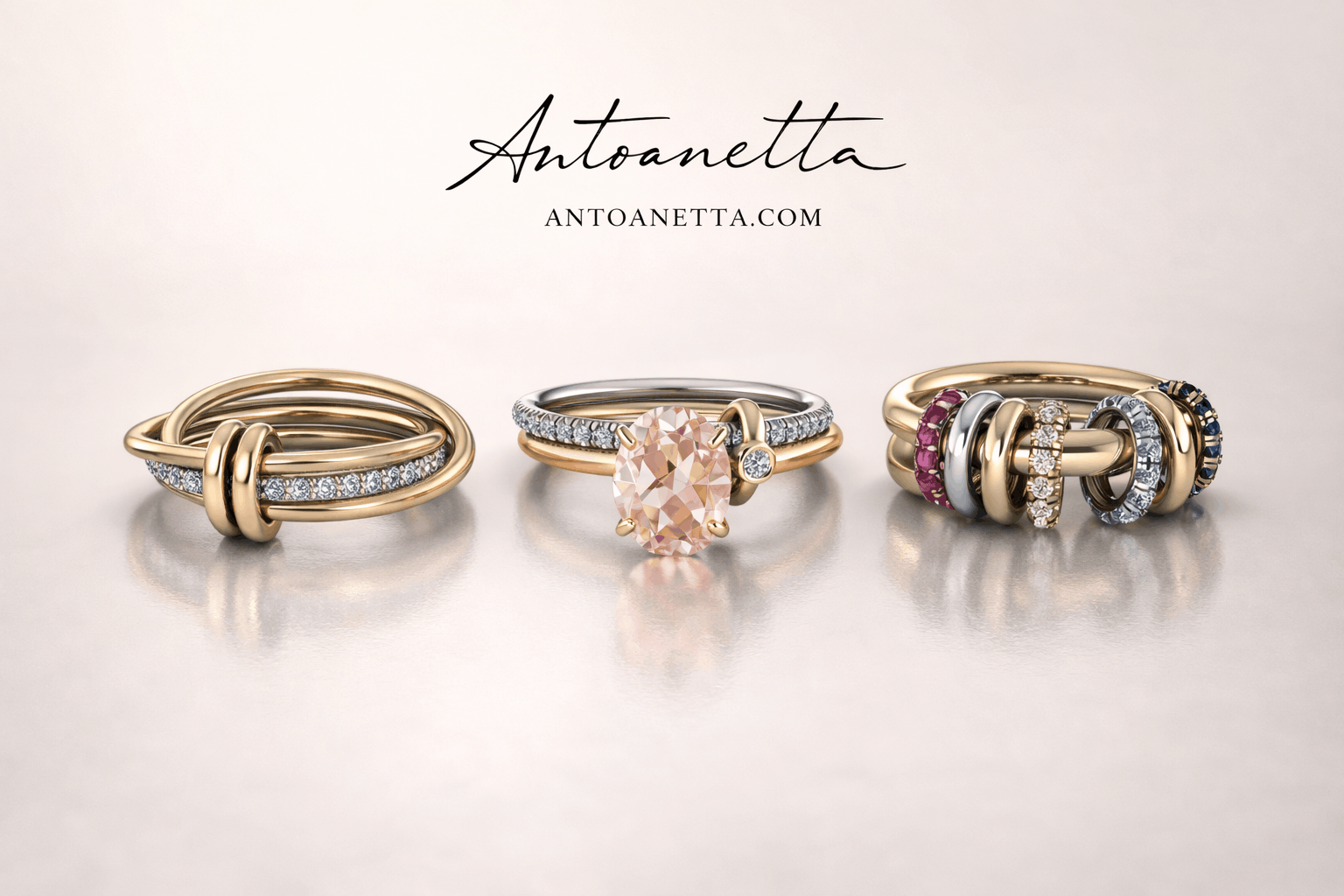
What Is the Difference Between Handmade and Machine Made Jewelry?
The difference between handmade and machine made jewelry starts at the workbench. Handmade jewelry is crafted by a jeweler using hand tools, torches, files, and manual techniques to shape metal and set stones. Machine made jewelry is produced using automated equipment - casting machines, CNC mills, and robotic setters - that replicate a digital design with minimal human intervention. Both methods produce real jewelry, but the process shapes the final product in ways that affect quality, character, and value.
How Is Handmade Jewelry Actually Constructed?
Handmade does not mean primitive. Modern artisan jewelers use precision tools, magnification, and in some cases CAD software for initial design work. What makes a piece handmade is the physical fabrication - a jeweler cuts, forms, solders, files, and finishes the metal by hand. Each step requires judgment calls that a machine cannot replicate. How much pressure to apply when setting a stone. How to adjust the curve of a band to accommodate a specific finger shape. When the solder flow is right.
Handmade rings often take days or weeks to complete. Complex designs with moving parts, multiple bands, or intricate stone settings require even longer because each component must fit precisely with the others. The jeweler tests the mechanics, adjusts tolerances, and verifies that everything functions correctly before final polishing.
How Does Machine Manufacturing Differ in Process?
Machine made jewelry begins with a digital 3D model. The design is sent to a casting machine that creates a wax model, which is then used to produce a metal casting. CNC machines may mill additional details or refine the shape. Stones are set by automated tools calibrated to place them in pre-cut seats. Polishing is done by tumbling machines or robotic polishing arms.
This process is efficient and consistent. A factory can produce hundreds of identical rings per day with minimal variation between them. The result is a uniform product at a lower price point, which is appropriate for many types of jewelry. However, the automated process limits design complexity. Features that require adaptive assembly - like interlocking bands that must be fitted together or links that need to move freely - are difficult or impossible to achieve through purely mechanical production.
What Are the Quality Differences You Can See and Feel?
Handmade jewelry tends to have a more refined finish in the details. Hand-set stones are positioned with attention to visual balance, not just mechanical placement. Solder joints are cleaner because the jeweler can control heat application precisely. Band edges are filed and shaped to a comfort fit that follows the natural curve of the finger rather than a generic template.
Machine made rings can have sharp edges from mold seams, slightly uneven stone placement, or a finish that feels less alive under the light. Mass-produced pieces are designed for acceptability across thousands of units, not perfection in any single one. For simple designs like plain bands or basic solitaire settings, machine production delivers perfectly adequate results.
How Does Construction Method Affect Long-Term Durability?
Handmade jewelry is typically more durable at the stress points that matter most. A jeweler building a ring by hand can reinforce areas that experience the most wear - the underside of the band, the prongs holding a stone, the junction between connected segments. They can adjust metal thickness, add structural support, and test weak points before the piece is finished.
Machine cast jewelry sometimes has porosity issues - tiny air bubbles trapped inside the metal during casting. These bubbles can weaken the structure and occasionally surface as pits over years of wear. Skilled hand fabrication avoids this because the jeweler is working with solid sheet or wire stock, not poured metal. The result is a denser, more structurally sound piece.
Is the Higher Cost of Handmade Jewelry Justified?
Handmade jewelry costs more because it takes longer to produce and requires a skilled artisan's time and expertise. A ring that takes a jeweler 20 hours to build will always cost more than one stamped out by a machine in minutes. What you receive in return is a piece with character, structural integrity, and the subtle evidence of human hands at work. See handcrafted 14k gold rings for examples of what artisan construction looks like in practice.
Discover rings crafted by hand in solid 14k gold - where every detail is intentional.
See Handcrafted Gold Rings