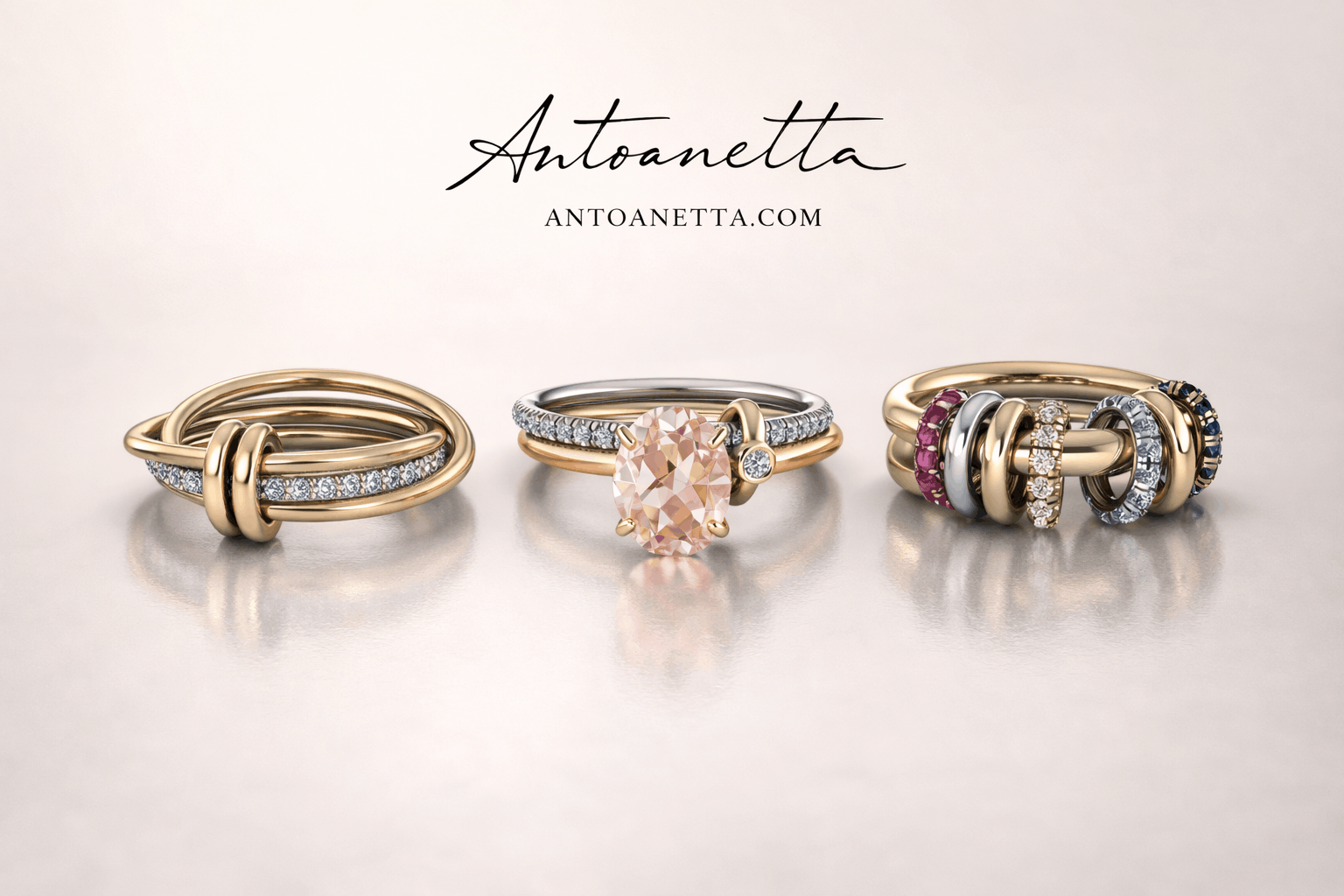
What Is the Difference Between 10k, 14k, and 18k Gold Rings?
The numbers 10k, 14k, and 18k refer to the amount of pure gold in a ring, measured in karats. Pure gold is 24 karats, so each number represents a fraction of that total. The higher the karat, the more gold content in the alloy - and the differences between these three options affect everything from color and weight to durability and price.
Choosing the right karat is one of the most important decisions when buying a gold ring. It determines how the ring feels on your finger, how it holds up over years of daily wear, and how it looks against your skin tone.
What Do the Karat Numbers Actually Mean?
Gold purity is measured on a scale of 24. A 10k gold ring contains 41.7% pure gold mixed with other metals like copper, silver, and zinc. A 14k ring steps up to 58.3% pure gold. An 18k ring contains 75% pure gold, leaving only 25% for other metals in the alloy.
The remaining metals in the alloy are not filler. They serve a functional purpose. Copper adds warmth to the color and improves hardness. Silver contributes to malleability. Zinc helps with casting. The specific combination and proportion of these metals determines the ring's final color, hardness, and resistance to wear.
How Does Gold Purity Affect Durability and Hardness?
Pure gold is a soft metal. The more gold in the alloy, the softer the ring. This is why 10k gold is the hardest of the three - it has the highest proportion of strengthening metals. It resists scratches and dents well, making it a practical option for people who work with their hands.
14k gold sits in the middle ground. It is hard enough to withstand daily wear without excessive signs of age, but it contains enough gold to maintain a rich, warm appearance. This is why 14k has become the most popular choice for fine jewelry in the United States. Jewelers who handcraft intricate designs, such as rings with moving components or detailed settings, often prefer 14k because it balances workability with structural integrity.
18k gold is noticeably softer. It picks up fine scratches more quickly, and thin sections of an 18k ring may bend under pressure that a 14k ring would resist. For rings with complex construction or small mechanical elements, 14k typically performs better over time.
How Does Karat Affect Color and Appearance?
Higher gold content produces a warmer, more saturated yellow. An 18k yellow gold ring has a deep, buttery tone that is immediately recognizable. A 14k yellow gold ring is slightly lighter but still distinctly gold. A 10k ring leans paler and can sometimes carry a slightly greenish tint depending on the alloy composition.
The differences are more subtle in white and rose gold. White gold at any karat is typically rhodium-plated, which gives it a uniform silvery finish regardless of the base alloy. Rose gold gets its pink hue from copper content - since 10k rose gold contains more copper relative to gold, it can actually appear slightly more pink than 18k rose gold, which trends closer to a warm peach.
What Is the Price Difference Between Gold Karats?
Gold is priced by weight and purity, so the karat directly affects cost. An 18k ring contains roughly 80% more pure gold than a 10k ring of the same size and weight. That translates to a significant price difference - often 40% to 60% more for 18k compared to 14k, depending on the complexity of the design.
The cost gap between 10k and 14k is smaller but still meaningful. For those prioritizing long-term quality and appearance, 14k delivers substantially more gold content without the premium of 18k. Many independent jewelers and artisan studios work exclusively in 14k for this reason - it offers the best balance of material value and practical performance.
Which Karat Is Right for Your Lifestyle?
The best choice depends on how you plan to wear the ring. If it is an everyday piece that will stay on through work, exercise, and sleep, 14k gold offers the durability to handle that lifestyle without sacrificing warmth or luster. If the ring is reserved for special occasions, 18k rewards you with a richer color and heavier gold content.
For a ring that you intend to wear for decades - an anniversary band, a statement piece, a ring you never take off - 14k solid gold consistently proves to be the most reliable choice. If you are starting your search, browse this curated guide to 14k gold rings for women for styles worth considering.
Explore a curated collection of solid 14k gold rings handcrafted for everyday wear.
Browse 14k Gold Rings for Women