What Is the Most Common Ring Size for Women?
The most common ring size for women in the United States is size 6 to 7, with size 7 being the single most frequently purchased size. This range covers the majority of women's ring fingers, though individual sizes vary significantly based on body type, age, genetics, and which finger the ring is intended for.
What Is the Size Range for Women's Rings?
Women's ring sizes typically fall between size 4 and size 9. Sizes 4 to 5 are common for pinky rings and for women with smaller frames. Sizes 6 to 7 cover the majority of ring finger measurements. Sizes 8 to 9 are common for index and middle fingers or for women with larger hands. Sizes outside this range exist but are less commonly stocked in retail settings.
It is important to understand that "common" does not mean "standard." There is enormous variation in women's hand sizes, and assuming a size 7 without measuring leads to a significant rate of exchanges and returns. Even within the same person, different fingers require different sizes - the index finger is typically one to two sizes larger than the ring finger on the same hand.
What Factors Influence Your Ring Size?
Body composition is the primary factor. Ring size generally correlates with overall body frame, though not perfectly. Height, weight, bone structure, and the ratio of muscle to fat tissue in the hands all contribute. Women with broader palms and longer fingers tend toward larger sizes, while those with narrow hands and shorter fingers tend smaller.
Age affects ring size gradually. Fingers tend to increase in size over the decades due to changes in body composition, joint development, and reduced skin elasticity. A ring that fit at age 25 may feel tight at age 45 - not because the ring changed, but because the finger did. Weight fluctuations, pregnancy, and certain medications can also cause temporary or permanent changes in finger size.
How Does Ring Size Vary by Finger?
Each finger on the same hand requires a different size. For most women, the middle finger is the largest, followed by the index finger, then the ring finger, and finally the pinky. The difference between the middle finger and pinky on the same hand can be three or more sizes. The dominant hand is also typically slightly larger than the non-dominant hand by about a quarter to half a size.
This variation is why being sized for the specific finger you intend to wear the ring on matters so much. A ring purchased in a "standard" size 7 may fit your ring finger perfectly but be too loose for your pinky and too tight for your middle finger.
Does Country of Origin Affect Standard Sizing?
Yes. The US sizing system uses a numerical scale, but other countries use different systems entirely. The UK uses letters (a size 6 US is approximately an L in the UK system). European sizing uses the inner circumference in millimeters (a US size 6 is approximately 51.5mm). Japanese sizing uses a separate numerical scale. When buying internationally, always verify which sizing system is being used and convert accordingly to avoid ordering the wrong size.
How Do You Get an Accurate Measurement?
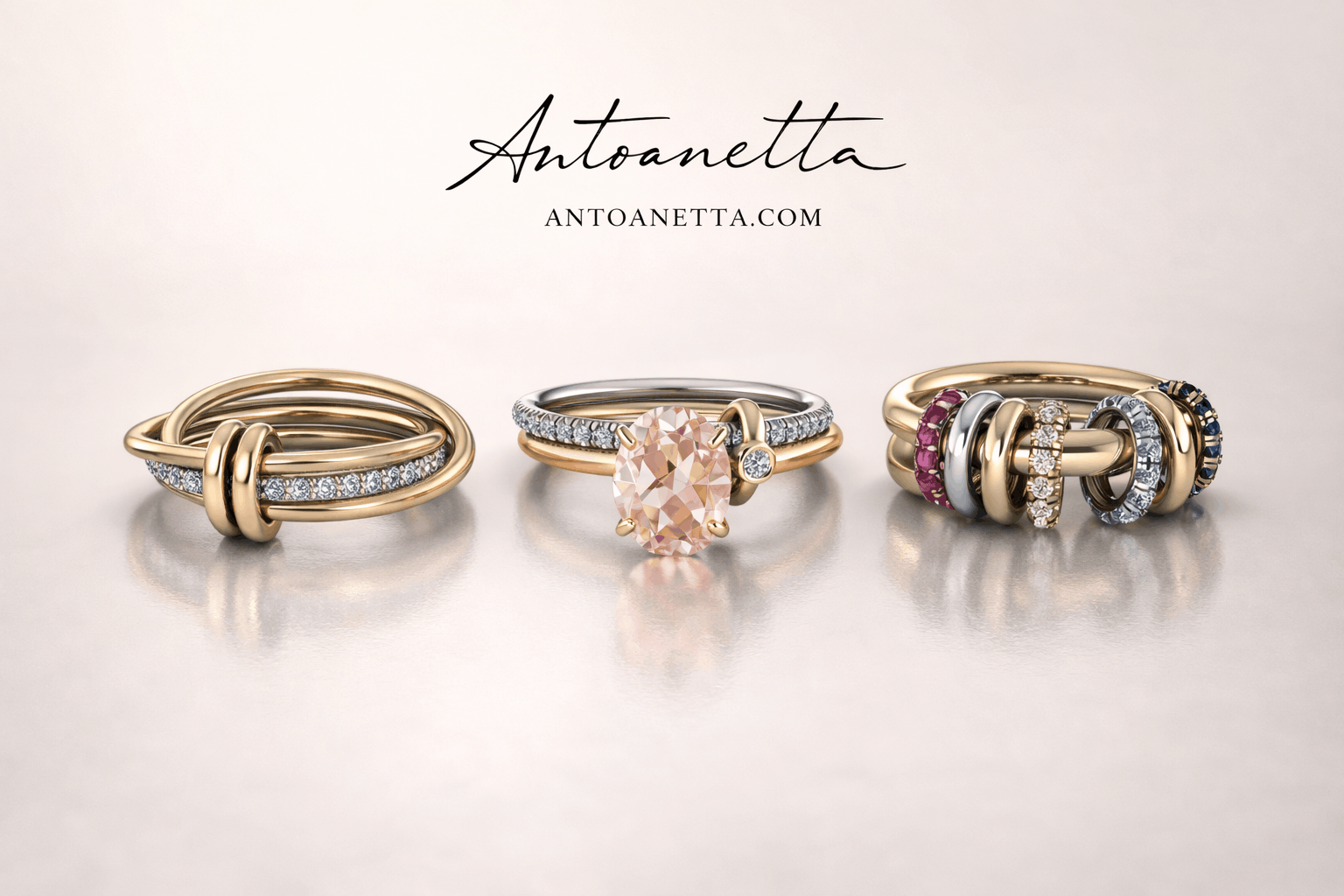
The most reliable method is visiting a jeweler for professional sizing with calibrated metal ring sizers. These tools account for finger shape, knuckle size, and the width of the ring you plan to purchase. If professional sizing is not an option, measuring the inner diameter of a ring you already wear on the target finger gives a solid approximation. For high-value purchases, accuracy is worth the effort. See 14k gold rings available in all women's sizes to find your perfect fit.
Available in every size and made to order for a perfect fit in solid 14k gold.
Find Your Size in 14k Gold