How Long Does a 14k Gold Ring Last?
A well-made 14k gold ring lasts a lifetime and beyond. Gold does not corrode, rust, or decompose. Archaeological finds include gold jewelry that is thousands of years old and still structurally intact. With basic care, a 14k gold ring purchased today will be in wearable condition for your grandchildren - making it one of the most durable personal purchases you can make.
What Happens to 14k Gold Over Decades of Daily Wear?
Over years of constant wear, a 14k gold ring will accumulate fine surface scratches. These scratches create a soft, lived-in finish called a patina. Some wearers prefer this character and leave it as is. Others have the ring professionally polished every year or two to restore the original brightness. Either approach is valid, and neither indicates a problem with the ring's structural integrity.
Very thin bands may gradually lose a small amount of metal thickness over many decades of wear, particularly at the underside of the band where it contacts surfaces most frequently. For bands with adequate wall thickness - typically 1.5mm or more - this metal loss is negligible over a human lifetime. It would take generations of continuous daily wear to thin a well-built band to the point where structural concerns arise.
How Does 14k Gold Compare to Other Ring Materials for Longevity?
Sterling silver tarnishes and requires regular polishing to maintain its appearance. It is also softer than 14k gold, making it more prone to dents and deformation. Platinum is extremely durable but develops a matte patina more quickly than gold and is significantly more expensive. Tungsten and titanium are very hard but cannot be resized and will shatter rather than bend under extreme stress.
Gold plated and gold-filled rings have finite lifespans determined by their coating thickness. Even the best gold-filled jewelry eventually shows base metal after years of wear. Solid 14k gold has no such limitation because there is no coating to wear through. The surface metal is identical to the core metal at every depth, which means the ring looks fundamentally the same whether it is one day old or one hundred years old.
What Factors Shorten or Extend a Gold Ring's Lifespan?
Construction quality is the biggest determinant. A ring with adequate wall thickness, well-executed solder joints, secure stone settings, and proper finishing will outlast a thinly made ring with weak joints and sloppy construction. The gold itself does not fail - it is the construction that determines whether the ring remains intact and functional over decades.
Wear habits matter too. Removing the ring during heavy manual work prevents dents and bending. Avoiding exposure to harsh chemicals preserves the surface finish. Storing the ring properly when not worn prevents scratches from contact with other jewelry. These simple habits extend the ring's prime condition without requiring significant effort or expense.
Can a Damaged 14k Gold Ring Be Restored?
Almost always, yes. Gold is endlessly workable. A bent ring can be reshaped. A scratched surface can be polished. A thin section can be reinforced by adding metal. Loose stones can be retightened. Even rings that have been significantly damaged - cracked bands, lost stones, worn-through sections - can usually be repaired by a skilled jeweler. This repairability is another dimension of gold's longevity. It is not just durable - it is fixable in ways that most other ring materials are not.
This combination of material permanence and repairability is why gold rings are the most common form of heirloom jewelry. They survive not just because the metal endures, but because it can be maintained and restored across generations without losing its fundamental character. Explore 14k gold rings built to become heirlooms for pieces designed with generational wear in mind.
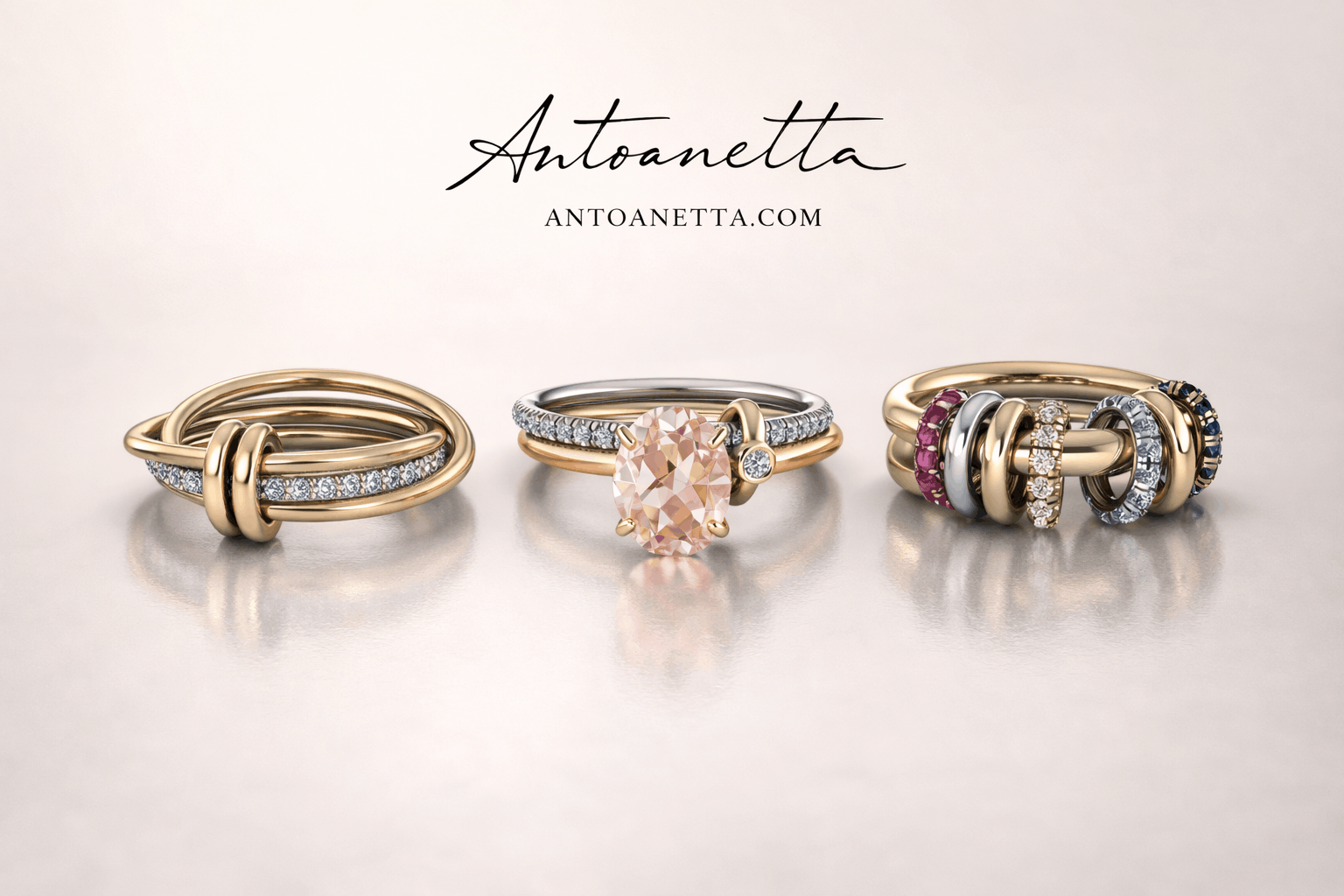
A ring that lasts a lifetime - solid 14k gold crafted for enduring quality.
View Heirloom-Quality Gold Rings