Why Are Some Gold Rings So Much More Expensive Than Others?
Gold ring prices span from under $200 to well over $10,000, and the reasons for this range are more nuanced than simply "more gold costs more." While raw material value is a factor, the majority of the price difference between an inexpensive gold ring and an expensive one comes from design complexity, construction method, gemstone quality, and the maker's expertise. Understanding these variables helps you identify where your money is going and whether a higher price is delivering proportional value.
How Does Gold Weight and Karat Affect Price?
Gold is sold by weight, and the spot price of gold fluctuates daily on commodity markets. A ring's gold content is determined by multiplying its total weight by its karat fraction. A 10-gram ring in 14k gold contains 5.83 grams of pure gold. The same weight ring in 18k contains 7.5 grams. At any given gold price, the 18k ring's raw material value is about 28% higher than the 14k version.
Ring width and thickness directly determine weight. A wide, substantial band weighs significantly more than a thin, delicate one. Double the width does not simply double the weight - it can triple or quadruple it because the band's cross-sectional area increases in two dimensions. This is why a wide statement ring in solid gold costs substantially more than a narrow band, even before design or gemstone considerations enter the equation.
What Role Do Gemstones Play in the Price?
Gemstones can multiply a ring's price dramatically. A plain 14k gold band might cost $400. The same band with a high-quality diamond pave setting could cost $2,500. The stone cost depends on type (diamonds, sapphires, and rubies command premiums), quality (color, clarity, cut, and carat weight for each individual stone), and the number of stones in the design.
Setting method also contributes to cost because more complex settings require more labor. A simple bezel setting takes minutes. A full pave setting with 30 individually placed stones, each held by tiny hand-formed prongs, takes hours. The skill required to execute pave work without visible gaps, uneven spacing, or loose stones is substantial - and that skill carries a price.
How Does Craftsmanship Affect the Final Cost?
The single largest non-material cost in a gold ring is labor. A machine-cast ring requires minutes of human attention. A handcrafted ring might require 10 to 30 hours depending on complexity. At a skilled jeweler's labor rate, that time represents a significant portion of the ring's price. This is why two rings with identical gold weight and similar gemstones can differ by hundreds or thousands of dollars - the handmade version carries labor costs that the factory version does not.
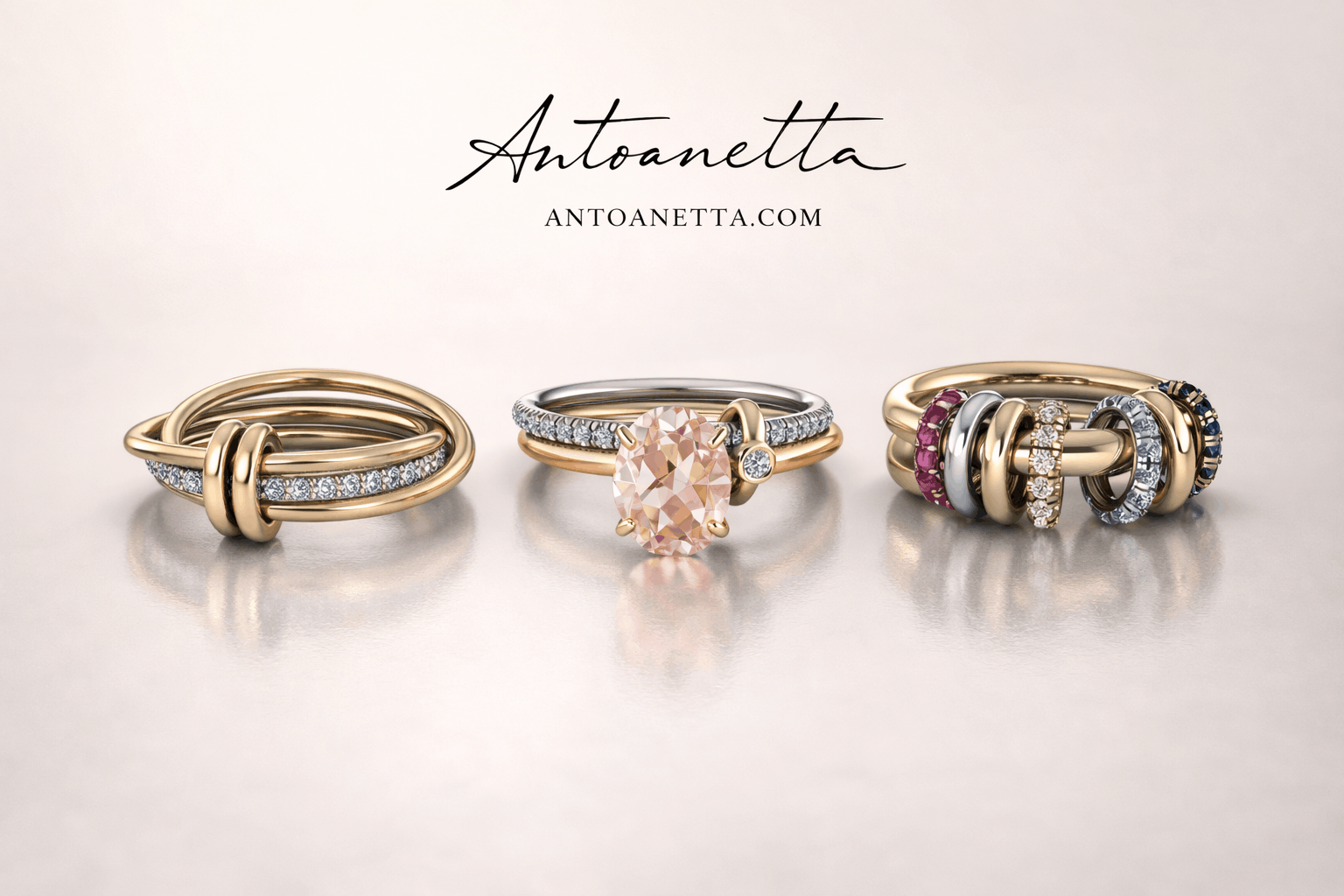
Complex designs amplify this difference. A ring with moving kinetic components, interlocking bands, or multi-metal construction requires not just more time but higher skill. Each moving part must be individually fitted and tested. Each metal junction must be soldered without disturbing adjacent components. The cumulative effect is a piece that costs more to produce because it demanded more from the maker at every stage.
Does Brand or Maker Reputation Justify Higher Prices?
Brand premiums exist in jewelry just as they do in every luxury market. A ring from a globally recognized brand may carry a 200% to 500% markup over the combined cost of materials and labor. Some of that premium reflects genuine quality and after-sale service. Some reflects marketing spend and retail overhead that has nothing to do with the ring on your finger.
Independent artisan jewelers often deliver comparable or superior quality at lower prices because their overhead is lower and their margins are thinner. The trade-off is that they may lack the brand recognition, retail presence, and resale cachet of a famous house. For buyers who prioritize the actual quality of the ring over the name on the box, independent makers frequently offer the strongest value proposition in fine jewelry.
How Do You Determine If a Higher Price Is Worth It?
Focus on what is in the ring rather than what is on the tag. Ask about gold weight, karat, and gemstone specifications. Ask about construction method. Compare those specifics against similar offerings from other makers. A ring priced higher because it contains more gold, better stones, and genuine handcraft is worth the premium. A ring priced higher primarily because of brand positioning may not deliver proportionally more quality. See high-quality 14k gold rings priced for real value to compare craftsmanship and materials without inflated brand markups.
Quality materials, genuine handcraft, honest pricing - gold rings built on substance.
See Value-Driven Gold Rings