What Is the Difference Between a Band Ring and a Cocktail Ring?
A band ring and a cocktail ring serve different purposes in a jewelry collection. A band ring is a continuous loop of metal - usually uniform in width - designed for everyday wear and comfort. A cocktail ring is a large, decorative piece built around a prominent center stone or an elaborate design, traditionally worn for social occasions. The difference is one of function, proportion, and intent.
What Defines a Band Ring?
A band ring is characterized by its simplicity and continuity. The design wraps around the entire finger without a distinct front and back - it looks essentially the same from every angle. Widths range from narrow 2mm bands to wide 10mm-plus designs. Some bands are plain polished gold, while others incorporate textures, engravings, or channel-set stones.
The strength of a band ring is its wearability. Because there is no protruding stone or raised element, bands sit close to the finger and do not catch on clothing, pockets, or gloves. They stack well with other rings. They work with any outfit. A well-made gold band is the most versatile piece of jewelry you can own - appropriate for the office, the gym, a formal event, or a Sunday morning grocery run.
What Makes a Cocktail Ring Distinct?
Cocktail rings originated in the Prohibition era of the 1920s, when women wore oversized, flamboyant rings to underground drinking parties as a symbol of rebellion and style. The tradition evolved, and by mid-century, cocktail rings became standard evening jewelry. The common thread is scale - cocktail rings are deliberately oversized, with large stones, elaborate settings, and designs that cover a significant portion of the finger.
Modern cocktail rings have loosened the original definition. They no longer require a massive center stone. Contemporary versions may feature sculptural metalwork, clusters of smaller stones, architectural bands, or kinetic elements. What makes them cocktail rings rather than everyday jewelry is their visual weight - they are designed to be noticed and to start conversations.
How Do Construction and Comfort Differ?
Band rings prioritize comfort for extended wear. The interior is typically smooth and rounded, sometimes with a comfort-fit profile that reduces friction. Weight is distributed evenly around the finger. Even wide bands feel balanced because there is no heavy element pulling the ring to one side.
Cocktail rings accept trade-offs in comfort for visual impact. A large stone or a complex setting adds weight to the top of the ring, which can cause it to rotate on smaller fingers. Wider shank designs help counteract this, as does careful engineering of the ring's center of gravity. High-quality cocktail rings address these ergonomic challenges during the design phase, while mass-produced versions often do not.
Which Occasions Call for Each Style?
Band rings have no occasion restrictions. They work everywhere, which is their primary advantage. Cocktail rings traditionally belong to dressy occasions - dinners, parties, events where jewelry is part of the outfit rather than an afterthought. However, the line between everyday and occasion jewelry has blurred in recent years. Many women now wear bold rings daily as part of their personal style, reserving simpler bands for situations that require a low profile.
Can One Ring Serve Both Purposes?
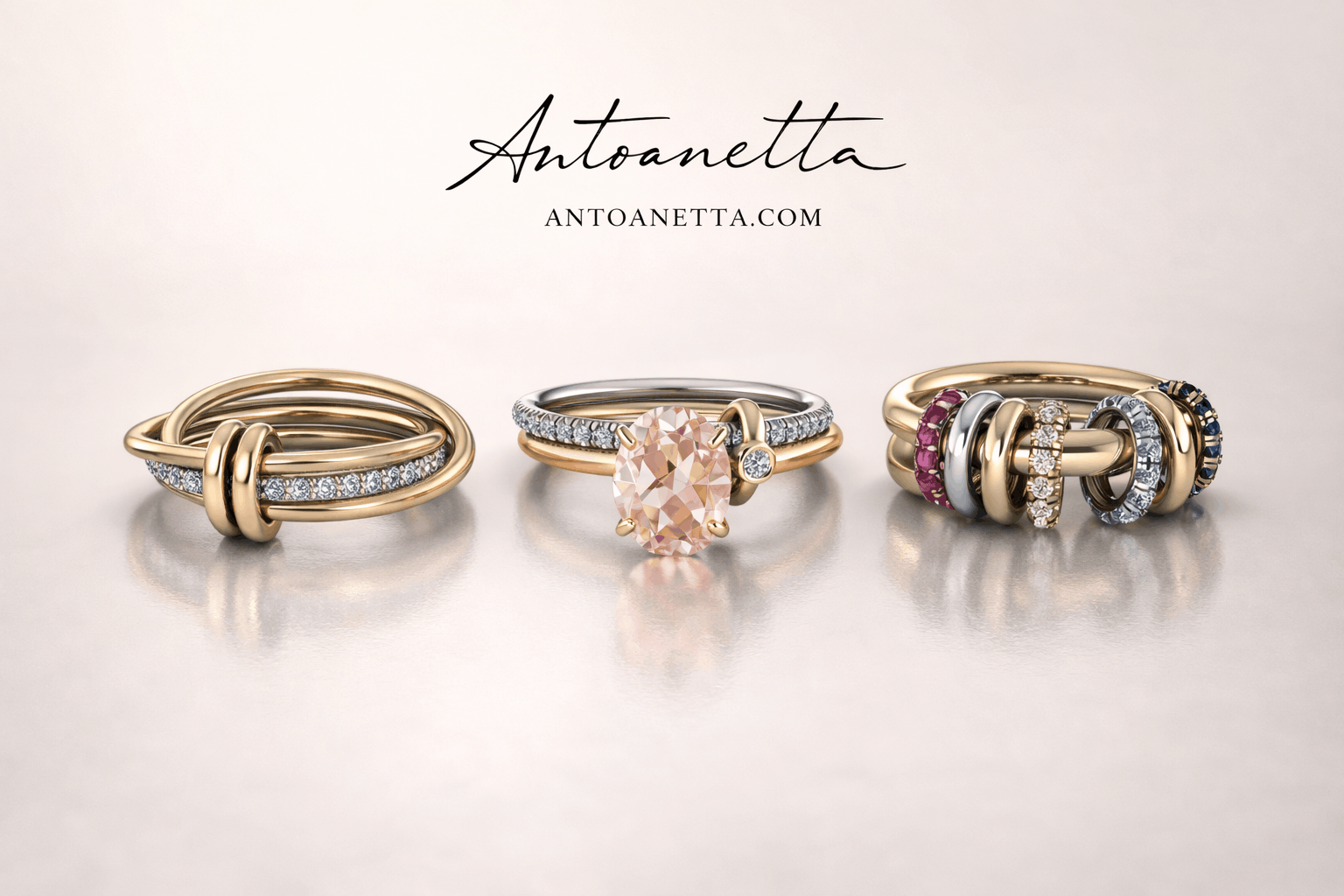
Some modern ring designs bridge the gap between band and cocktail styles. Wide bands with interesting metalwork or moving elements carry the visual impact of a cocktail ring while maintaining the comfort and wearability of a band. These hybrid designs appeal to women who want one ring that transitions seamlessly between casual and formal contexts. Explore 14k gold rings that bridge everyday and statement wear to find designs that work across all settings.
Whether you prefer a classic band or a bold cocktail ring, start with solid 14k gold.
Browse All Ring Styles