How Many Rings Should a Woman Wear at Once?
There is no fixed rule for how many rings a woman should wear at once. The right number depends on the style of the rings, the size of your hands, the occasion, and your personal comfort level. Some people look best in a single bold piece. Others build layered combinations across multiple fingers that create a cohesive, intentional look. The key is balance - not quantity.
What Are the General Guidelines for Ring Stacking?
A safe starting point is one to three rings total across both hands. This provides enough visual interest to be noticed without competing with other elements of your outfit. Within that range, vary the scale - pair a wider or bolder ring on one finger with thinner, simpler bands on others. This creates a focal point rather than a wall of equal-weight pieces that fight for attention.
If you want to wear more than three rings, the principle of visual hierarchy becomes important. Choose one ring as the anchor - the piece that gets the most attention. Everything else should support that piece rather than compete with it. Thin plain bands, delicate eternity rings, and narrow textured bands all work well as supporting players alongside a single statement ring.
Which Finger Combinations Work Best?
The most natural combinations use non-adjacent fingers. Wearing rings on the index and ring finger of the same hand leaves a visual gap that gives each piece room to breathe. The middle finger works as a bridge piece - a ring there can connect the look between neighboring fingers without crowding.
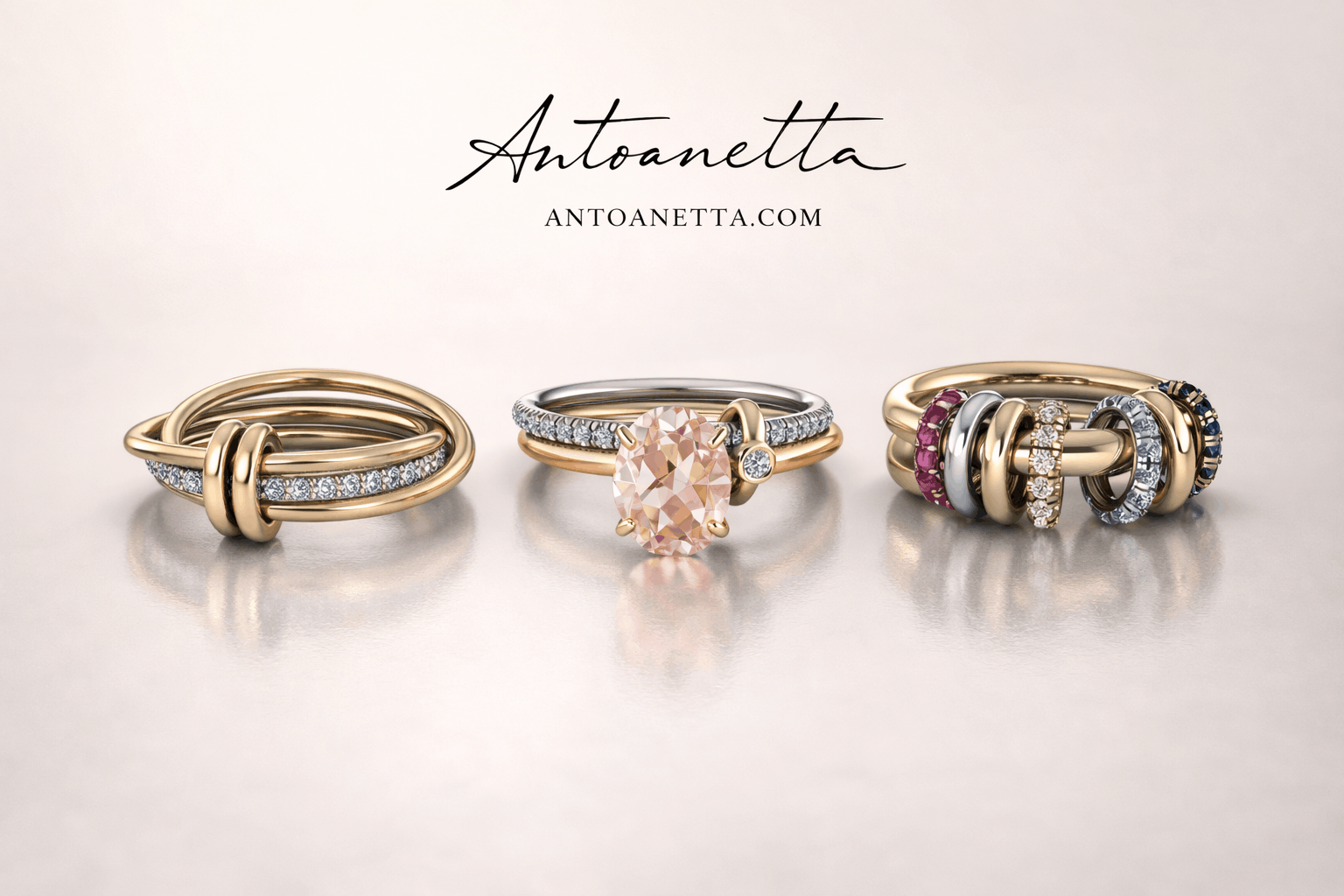
Stacking multiple rings on a single finger works best with thin bands. Two or three narrow rings layered together on one finger create a collected, intentional appearance. Mixing metals - yellow and rose gold, or yellow and white - adds depth to the stack. Avoid stacking wide rings on the same finger unless they are specifically designed to interlock or nest together.
How Does Ring Style Affect the Number You Can Wear?
Minimalist bands are designed for multiples. Their slim profiles and understated character mean you can wear four or five across both hands without looking overdone. Statement rings, by contrast, generally work best as solo pieces or paired with one or two very simple bands. A wide kinetic ring with moving elements carries enough visual weight on its own - adding equally bold pieces dilutes its impact.
Gemstone rings occupy a middle ground. A single eternity band or pave ring works well paired with a plain band on the same or adjacent finger. Multiple gemstone rings can work together if they share a color family or metal tone, but mixing too many different stones across multiple fingers can look scattered rather than curated.
Does Hand Size and Finger Length Matter?
Proportion matters more than hand size itself. On longer fingers, wider rings and multiple ring combinations look balanced because there is more visible finger length above and below each ring. On shorter fingers, narrower bands and fewer total rings tend to look more proportional. Wide rings on short fingers can make the hand appear stubbier, while a single well-chosen piece can actually elongate the visual line.
What About Mixing Metals Across Multiple Rings?
Mixed metals are not only acceptable but often look more intentional than matching everything. Combining yellow, rose, and white gold across different fingers creates warmth and dimension. The key is to avoid making it look accidental - if you mix metals, commit to it rather than having one off-color piece that looks like a mistake. Rings that already incorporate mixed metals in their design make this easier, as they inherently bridge different tones. Explore 14k gold rings in mixed metals and varied widths to find pieces that layer and combine well.
Build your ring combination with pieces designed to complement each other.
Find Your Perfect Ring Pairing