Do Gold Rings Stretch Over Time?
Gold rings can change shape slightly over years of wear, but "stretch" is not quite the right word. Gold does not stretch the way elastic materials do. What happens is gradual deformation - the band slowly bends or thins under repeated mechanical stress. The extent depends on the gold's karat, the ring's design, and how it is worn. Understanding these factors helps you choose a ring that will maintain its size and shape for years.
Why Does Gold Deform Under Pressure?
Gold is a ductile metal, meaning it can be drawn into wire or hammered into thin sheets without breaking. This ductility is what allows jewelers to shape it into rings in the first place. But the same property means gold can change shape when subjected to sustained or repeated force. Gripping tools, leaning on hard surfaces, or even the pressure of adjacent fingers over thousands of hours can gradually push a thin band out of round.
The degree of deformation depends on the alloy's hardness. 10k gold is the most resistant to bending because its higher proportion of hardening metals makes it stiffer. 14k gold offers a strong balance - hard enough to resist casual deformation while remaining workable for complex designs. 18k and 24k gold are noticeably softer and more prone to losing shape under everyday pressure.
Does Ring Design Affect How Much a Ring Changes Shape?
Width and thickness are the most important design factors. A thin, narrow band has less structural resistance to bending forces. A 2mm wide, 1mm thick band will distort much more readily than a 6mm wide, 2mm thick band. Wider rings distribute force across a larger area, and thicker walls provide more material to resist deformation. If you want a ring that holds its shape indefinitely, choosing a design with substantial metal volume is the most effective approach.
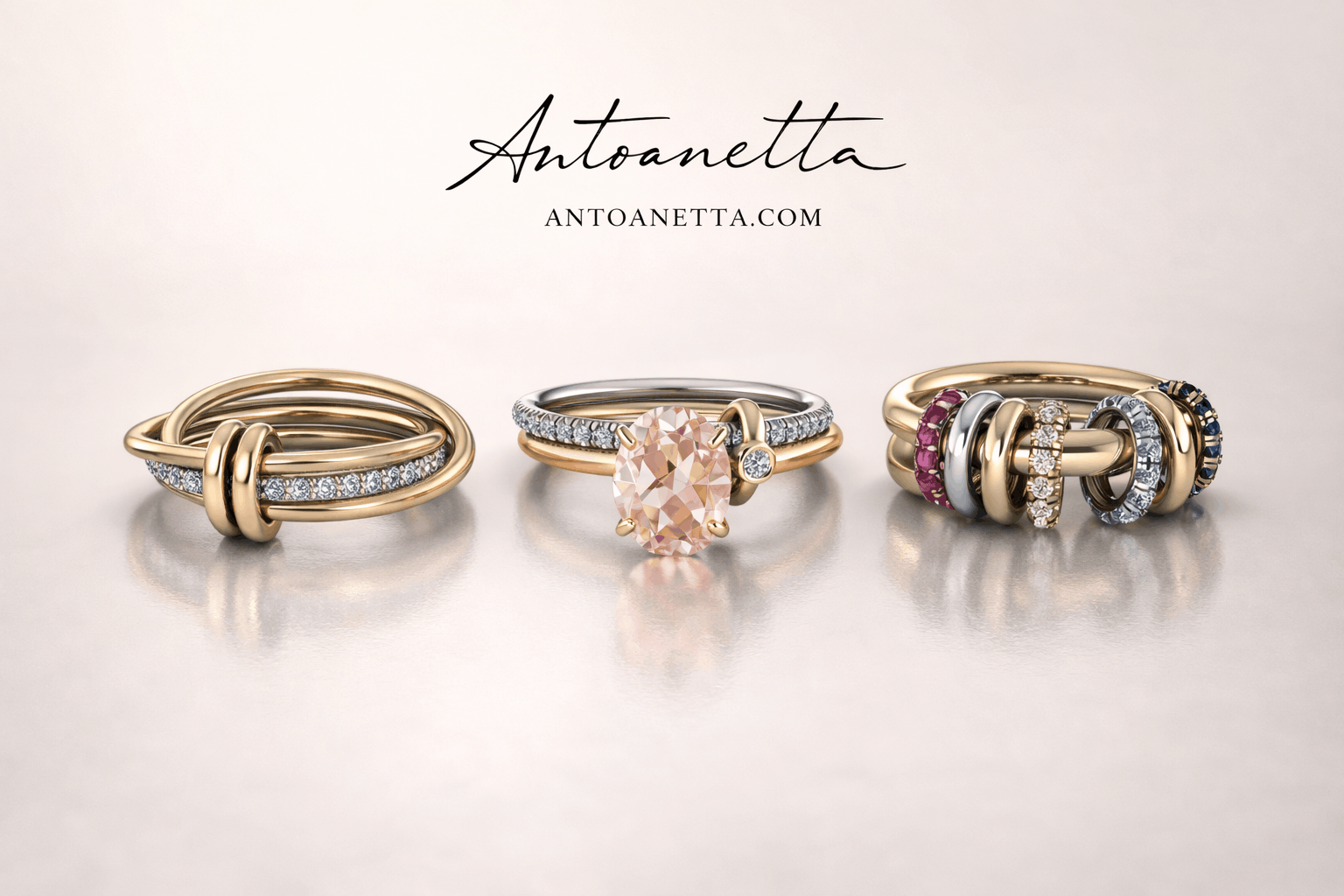
Multi-band and multi-component designs handle deformation differently. Rings with interlocking or connected bands distribute stress across multiple structural elements rather than concentrating it on a single band. This can actually make complex designs more resilient than simple thin bands, because the forces that would bend a single band are absorbed by the interaction between multiple components.
Can a Stretched or Deformed Ring Be Fixed?
Yes. A jeweler can reshape a deformed gold ring using mandrels and forming tools. For minor out-of-round issues, the correction takes minutes. More significant deformation may require the ring to be heated and carefully reformed. In extreme cases where the band has thinned noticeably, the jeweler may recommend adding metal to reinforce the weakened area.
Professional reshaping is a routine service that most jewelers offer. It is not a sign that the ring was poorly made - even well-constructed rings can change shape over decades of constant wear. The advantage of solid gold is that it can be reshaped repeatedly without losing material integrity. Plated or filled rings cannot be reshaped because the process would damage or remove the surface layer.
How Do You Prevent Excessive Deformation?
The simplest prevention is choosing the right ring for your lifestyle. If you work with your hands frequently, a wider band in 14k gold provides the structural resistance you need. Removing your ring before activities that apply direct pressure to it - weightlifting, gardening, mechanical work - also helps. Storing the ring on a ring holder rather than tossing it in a drawer or pocket prevents accidental bending when it is not being worn.
For rings you plan to wear continuously for years, investing in solid construction and adequate metal thickness is the best long-term strategy. A well-built 14k gold ring with appropriate wall thickness will maintain its shape through decades of daily wear with only occasional professional reshaping needed. Browse durable 14k gold ring designs built with substance and structure for lifelong wear.
Choose a ring built to keep its shape - solid 14k gold with substantial construction.
Browse Durable Gold Rings